


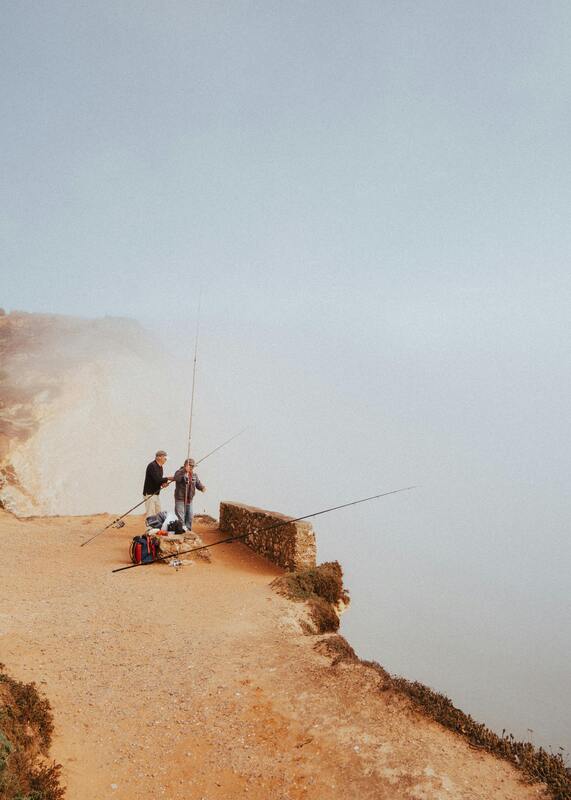
1. What's a Fishing Rod?
It's basically a long stick that helps you throw your bait or lure out there and catch fish. It works together with your line, reel, and hook to get your bait to the fish.
2. Types of Fishing Rods
Rods can be sorted by how long they are, how they bend, how strong they are, and what they're made of. Here's the lowdown:
A. What They're Used For:
Spinning Rods
These are the most normal, great if you're just getting started.
They go with spinning reels.
They're good for lightweight stuff.
Casting Rods
These pair with baitcasting reels.
Good for heavy lures when you need to be accurate.
Usually, more experienced people use these.
Fly Rods
Made for fly fishing, of course.
They're long and bendy so you can cast really light flies.
You'll need a special line and know how to use it.
Trolling Rods
These are for when you're fishing from a moving boat.
They're tough and long for fishing in deep water.
Surf Rods
Super long so you can cast far from the beach.
Built strong to handle big fish in rough waves.
Ice Fishing Rods
Short rods that you use to fish through holes in the ice.
Usually paired with tiny reels.
B. How Long They Are:
Short rods (4–6 ft): For when you need good control. They're great for smaller spots and light lures.
Medium rods (6–8 ft): These do it all, good for most freshwater fishing.
Long rods (8–14 ft): For when you need to cast far, like from the beach or a riverbank.
C. How strong they are:
The power tells you how much the rod can handle when a fish pulls:
Ultra-light: For tiny fish when you have to be sneaky.
Light: Good for panfish and trout.
Medium: For bass and walleye.
Medium-heavy: For bigger freshwater kinds of fish.
Heavy: For big boys in saltwater, like tuna or catfish.
D. How It Bends (Action):
This tells you where and how much the rod will bend:
Slow action: It bends all over. Good for small fish.
Moderate action: Bends in the middle. Good for different ways of fishing.
Fast action: Bends near the tip. You can feel even small bites.
Extra-fast: Only the tip bends. For when you need to be super precise with big fish.
3. What Rods Are Made Of
Fiberglass
It's tough, bendy, and cheap.
It's heavier and doesn't react as fast.
Graphite (Carbon Fiber)
It's light, feels every bite, and reacts fast.
It can break easier and costs more.
Composite
It's some of both, fiberglass and graphite.
You get a mix of strength and feel.
4. Parts of a Rod
Handle: Where you hold it, usually made of cork or foam so it's comfy.
Reel Seat: This is where you put the reel.
Guides: The rings that the line goes through.
Tip: The end that lets you feel when a fish bites.
Blank: The main part of the rod.
5. How to Pick a Rod
Think about:
What Fish You're After: Big fish need stronger rods.
Where You're Fishing: Rivers, lakes, the ocean, ice – they all need different rods.
How Far You Need to Cast: Longer rods help you cast further.
How You're Fishing: Are you fly fishing? Trolling?
What Feels Good: You want a grip and weight that feel right.
6. Taking Care of Your Rod
Wash it after using it in saltwater.
Check the rings to make sure they aren't broken.
Store it standing up or laying flat.
Don't bend it too much.
7. Things That Go with Your Rod
Rod holders
Rod socks or cases
Line clippers
Reel covers
8. Tips for Newbies
Start with a normal spinning rod (6–7 ft, medium power).
Use a line and lure that match the rod.
Practice casting before you hit the water.
Take care of your rod so it lasts.